To explore the lands of Provence Occitane is to immerse yourself in the region's thousand-year-old history, going back to the ancient times when our country bore the name of Gaul.
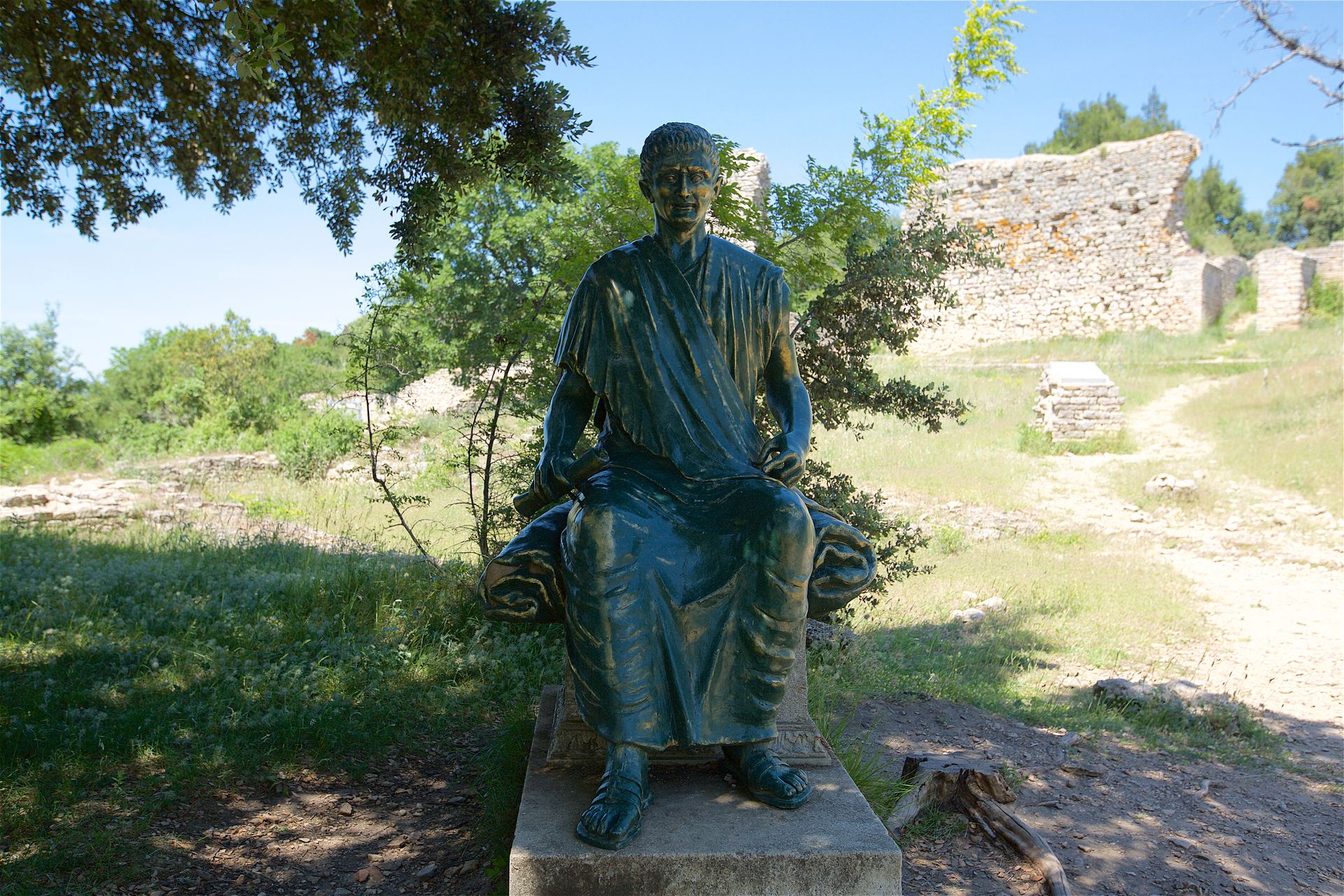
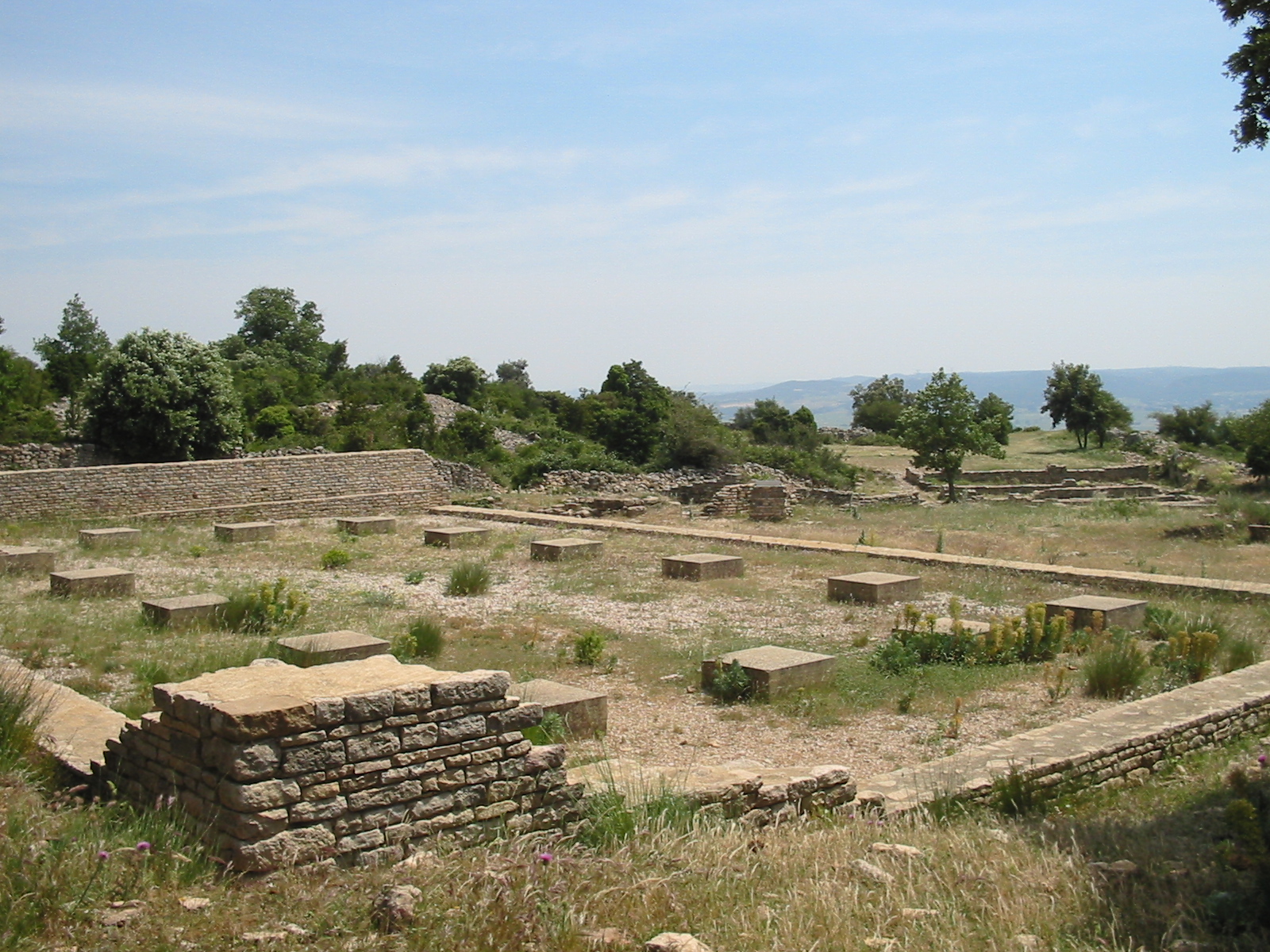
Although its name evokes military power, Caesar's Camp was in fact a Gallo-Roman city covering almost 18 hectares. Perched on a hilltop, it offers a breathtaking panorama of the Rhone corridor and the Cèze and Tave valleys.
Today, the site is the scene of regular archaeological excavations, revealing the vestiges of a lively ancestral life. The cobbled streets still bear the traces of this human activity, which lasted until the 13th century, marked in particular by the presence of the Benedictines. You can admire the remains of two places of worship, a Romanesque oratory and a chapel dedicated to Saint Jean.
But Caesar's Camp is also the guardian of ancient legends, inscribed in its stones. The most famous is that of the "Golden Goat", celebrated at the summer solstice on St. John's Day, June 24. Legend has it that at midnight, a chasm opens up to let out the Golden Goat, symbol of the sun. It is said to guard the treasure left by Hannibal when he passed through the region.
Come and discover these stones steeped in history, and let us tell you about the ancestral legends that continue to echo through the valleys of Provence Occitane. Website
Find out more...
Book your car to go and see it !
🧐
Here are some little-known facts and legends about Caesar's Camp:
Legend of the Golden Goat: In addition to the aforementioned legend of the Golden Goat, symbol of the sun, there are popular tales that the Golden Cabro is actually a mystical guardian of the treasure hidden by the Romans in the depths of Caesar's Camp. According to legend, those who dare to venture into the site's caverns risk coming across the cabro, fiercely protecting the treasure with its sharp horns.
Solar worship and pagan celebrations: Before the arrival of Christianity in the region, the Camp de César plateau would have been the site of pagan celebrations dedicated to the worship of the sun. The inhabitants of the town would have organized rituals and festivities on the summer solstices, marking the beginning of the summer season. These celebrations were accompanied by dancing, singing and sacrifices in honor of the sun, the source of life and fertility.
Hannibal's treasure: Another enduring legend is that of the treasure of Hannibal, the Carthaginian general famous for crossing the Alps with his elephants during the Second Punic War. According to legend, Hannibal hid part of his booty in the vicinity of Caesar's Camp during his passage through the region. Popular tales have it that intrepid treasure seekers have attempted to recover these lost riches, but none have ever succeeded in unlocking the mystery of the site's caverns.
Gaulish resistance: Although Caesar's Camp is often associated with Roman domination, it was also the scene of resistance by local Gauls against the Roman invaders. Recent archaeological discoveries suggest that some inhabitants continued to live in the city and maintained their Gaulish way of life despite increasing Roman influence. These discoveries shed new light on the cultural diversity and complexity of relations between the Gauls and Romans in the region.