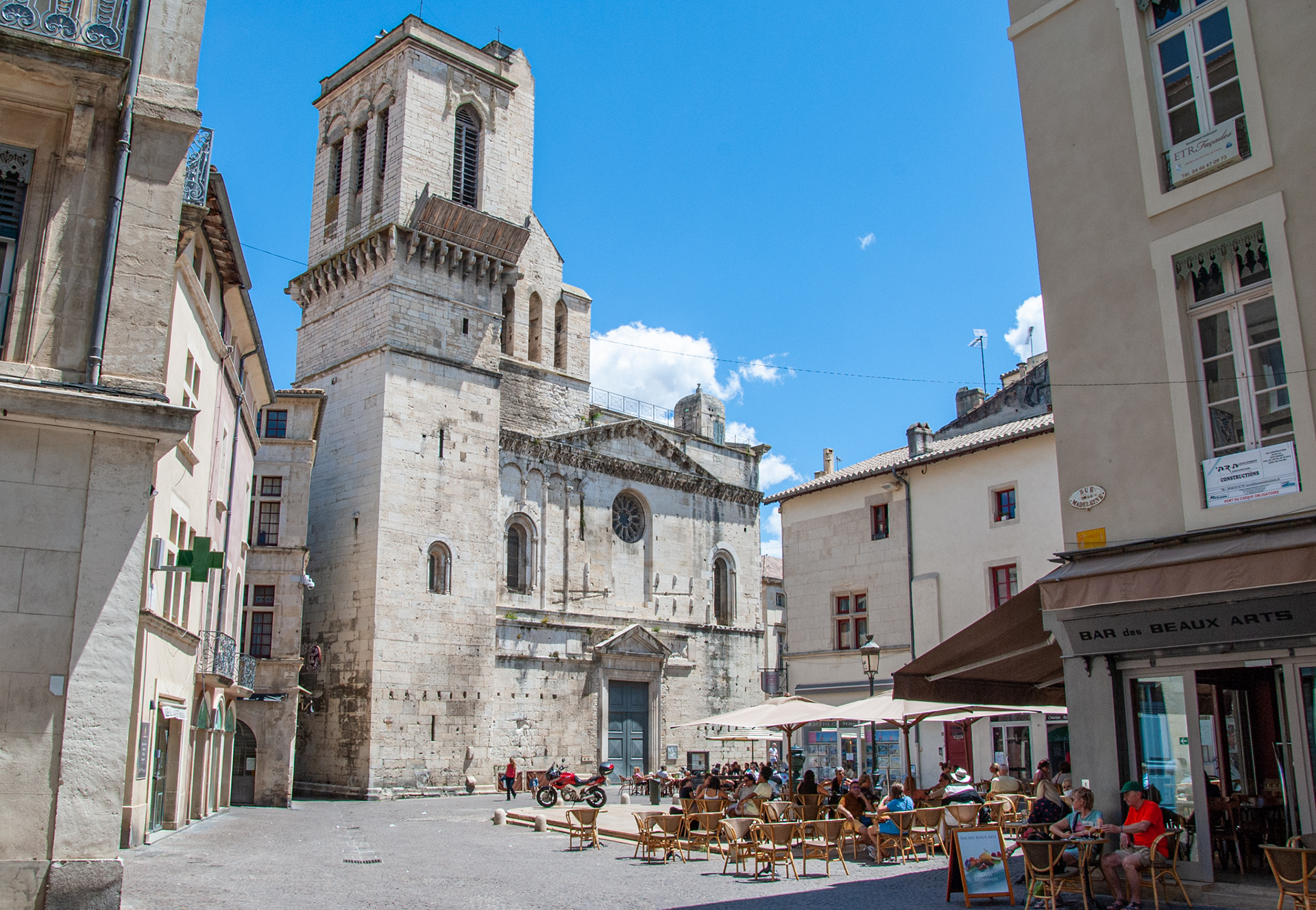
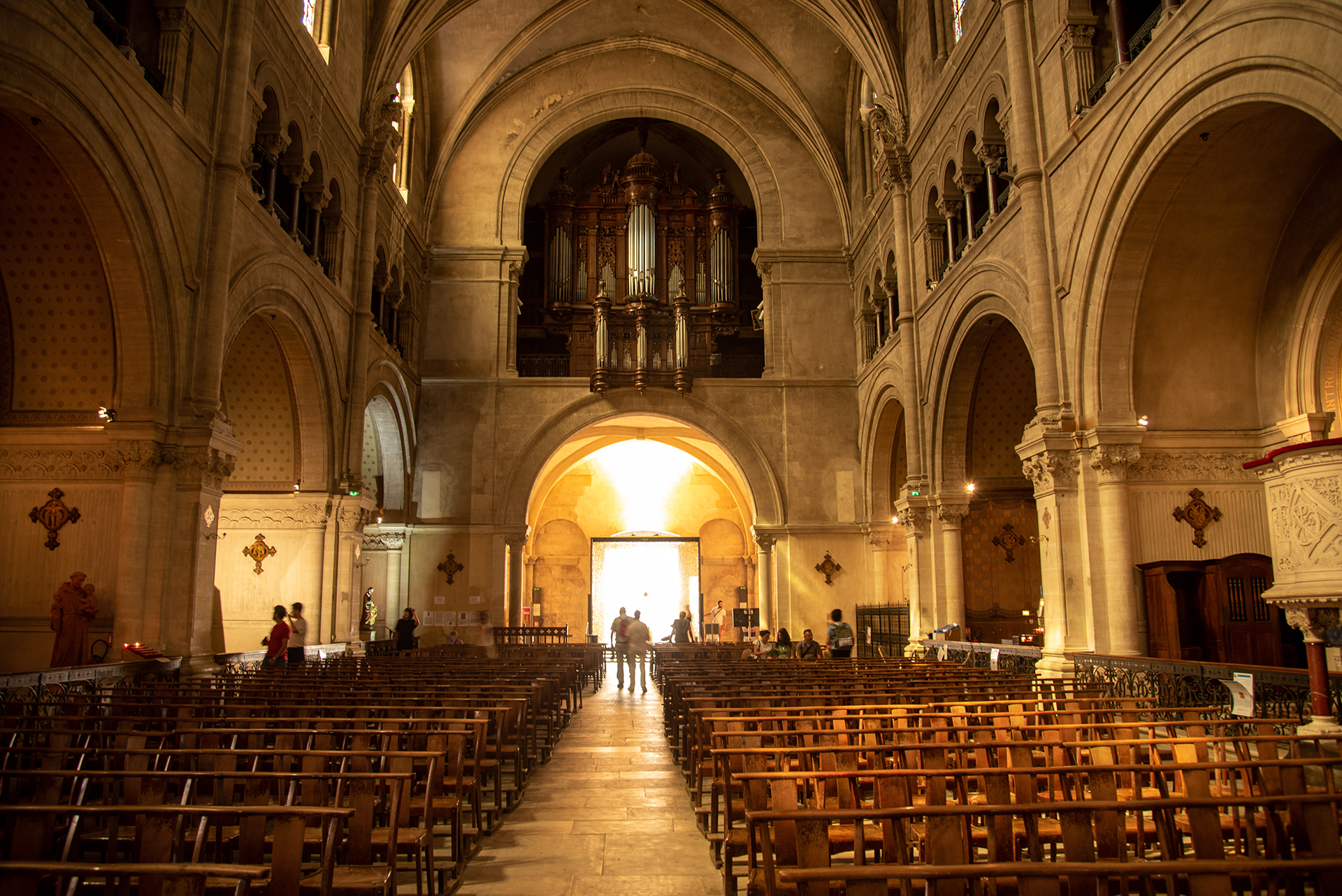
The cathedral has had several names over the centuries, first as Sainte Marie, then Notre Dame, and finally, after the Revolution, it was dedicated to Saint Castor. Inside, you can admire the tombs of Cardinal de Bernis and Monseigneur Cohon, Bishop of Nîmes, as well as a marble sarcophagus from the early Christian period.
During the Wars of Religion, religious buildings were severely tested, and the cathedral was no exception. Destroyed twice, it was rebuilt on its own ruins, retaining elements from different architectural periods, such as 11th-century Romanesque church bases, 17th-century neo-Gothic elements and 19th-century renovations.
A point of interest not to be missed is the medieval frieze of the first cathedral, bearing witness to its eventful history. In 1567, during the history of the Michelade, the cathedral was the scene of religious violence, with Catholics thrown into the well in the bishop's courtyard by Protestant rioters.
After two major renovations, the cathedral today offers a unique architectural blend, combining original 11th-century elements, a preserved façade, and later renovations in the neo-Gothic style. Inside, you can admire remarkable 17th-century organs, Gallo-Roman sarcophagi and works by renowned local artists.
Consecrated in 1096 by Pope Urbain II and Raymond IV, Count of Toulouse and Count of Nîmes, Saint Castor's cathedral remains a symbol of the region's eventful history and a testament to human perseverance down the centuries. Website
Find out more...
Book your car to go and see it !
🧐
Here are some lesser-known facts about Nîmes' Saint Castor Cathedral :
The origins of the Michelade: The Michelade, referred to in the text, is a tragic event that took place on September 29, 1567 at Saint Castor Cathedral. This bloody episode was triggered by the murder of several Catholics, thrown into the well in the bishop's courtyard by Protestants during a religious procession. The event left a lasting impression, and has been commemorated throughout Nîmes' history.
Gallo-Roman sarcophagus: In addition to the tomb of Cardinal de Bernis and Monseigneur Cohon, the cathedral also houses a Gallo-Roman sarcophagus. This ancient vestige bears witness to the deep history of the region, recalling the civilizations that preceded the Christian era.
Paintings by local masters: In addition to architectural elements and ancient sarcophagi, the cathedral also contains artistic treasures, including paintings by renowned local artists. These works offer a glimpse of the region's cultural and artistic richness through the ages.
Historic consecration: Saint Castor's Cathedral was consecrated in 1096 by Pope Urban II and Raymond IV, Count of Toulouse and Count of Nîmes. This consecration marked a major event in the history of the church and the region, underlining the importance of the cathedral in the religious and political life of the time.
Architectural fusion: The cathedral presents a remarkable fusion of architectural styles, from the 11th-century Romanesque church to the 19th-century neo-Gothic renovation. This architectural diversity reflects the building's many stages of reconstruction and development over the centuries.