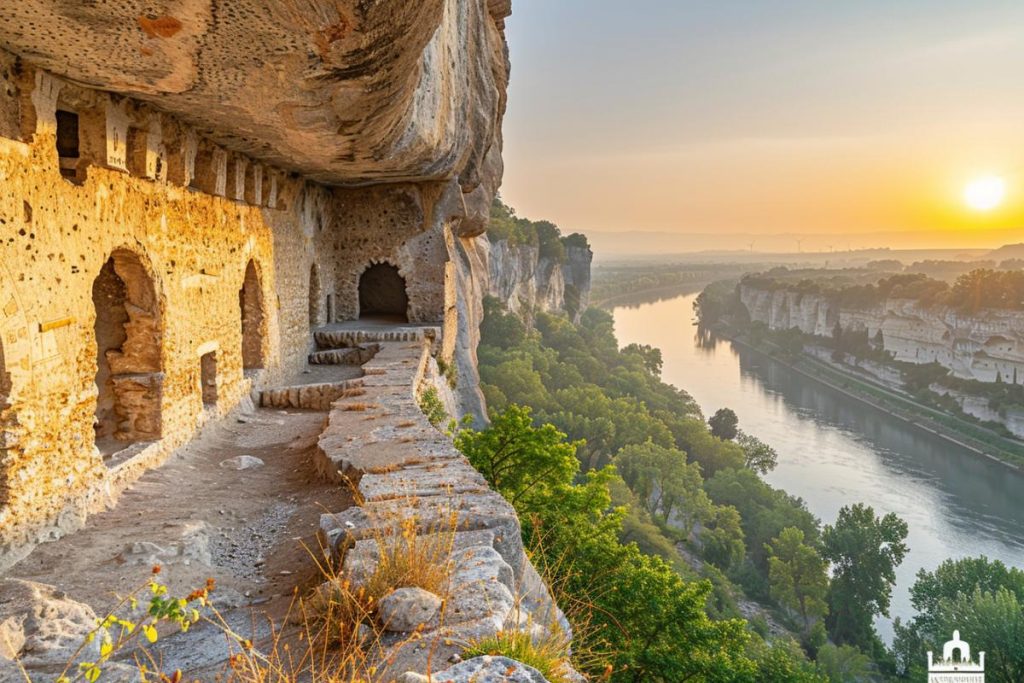
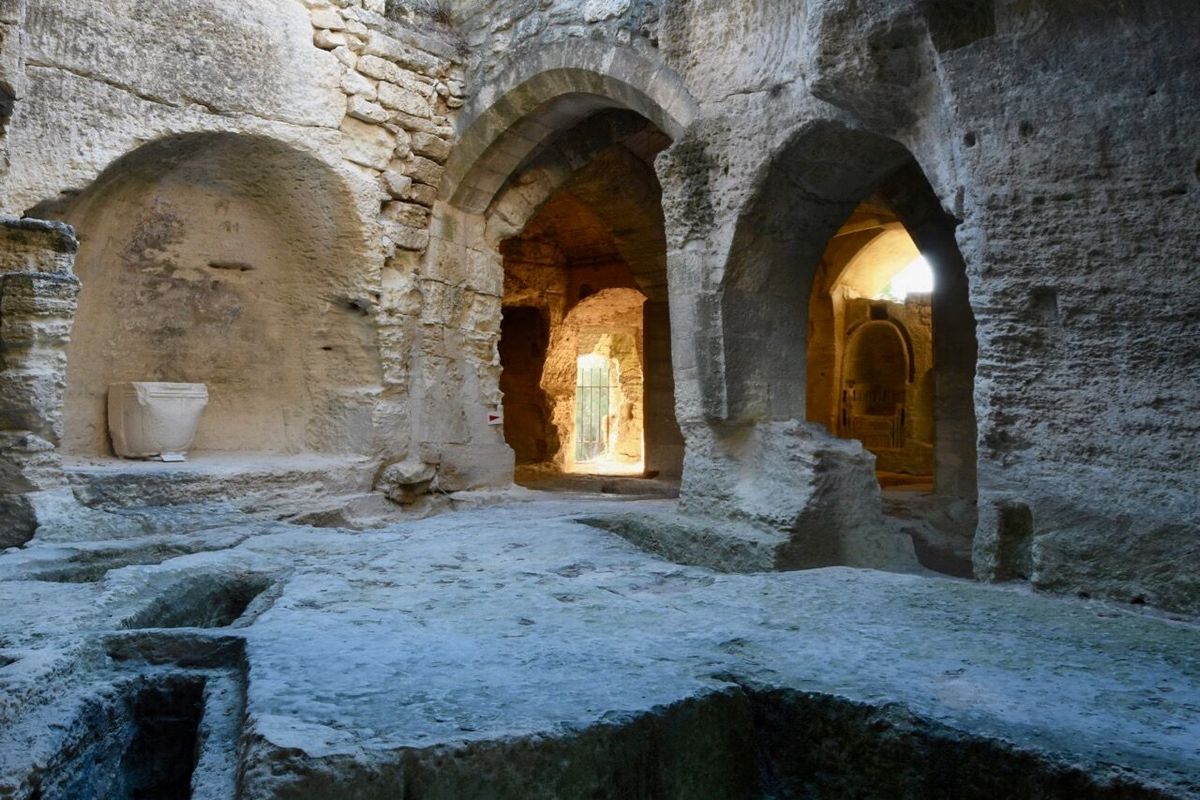
Come and explore the mysteries of the troglodytic Abbey of Saint-Roman, perched on a hilltop majestically overlooking the Rhône. This remarkable site is a veritable rock necropolis, with hundreds of tombs carved directly into the rock.
The remains of this monastic life are exceptional and without equal in Western Europe. Among them, you'll discover chapels, cells, cisterns and cellars, bearing witness to the existence of a monastery established well before the 10th century.
Your route begins at the guarded parking lot, from where a path winding through the Mediterranean garrigue takes you to the top of this limestone hill. Once up there, you'll be rewarded with a breathtaking panorama of the Rhône, the Alpilles and the magnificent Provence, offering incomparable views of the river and the surrounding region.
Immerse yourself in the fascinating history of this troglodytic abbey, where the past and nature blend harmoniously to create a place of incomparable beauty and intrigue. Website
Find out more...
Book your car to go and see it !
🧐
Here are some lesser-known facts about the troglodytic Abbey of Saint-Roman:
Prehistoric origins: Although the abbey is often associated with a medieval monastic foundation, parts of its troglodytic structures date back millennia before the Christian era. Archaeological evidence suggests that these caves were used by prehistoric populations long before the arrival of the monks.
Defensive use: In addition to its monastic role, the abbey would also have served as a place of refuge and defense during periods of political instability and invasion. The natural caves provided a safe haven for local inhabitants in the event of conflict.
Role in maritime trade: Because of its strategic location overlooking the Rhône, the abbey would have played an important role in the region's maritime trade. Archaeological remains suggest the existence of quays and port facilities near the abbey, facilitating river trade.
Contemporary use: During the Second World War, the abbey was used as a hideout by the French Resistance, sheltering resistance fighters and refugees fleeing the Nazis. This dark period in history adds another layer of complexity to the abbey's history.
Recent archaeological excavations: Archaeological excavations in recent decades have revealed new details about the daily lives of the abbey's inhabitants, including religious artifacts, tools and everyday objects, offering a more complete insight into life in this remarkable place.