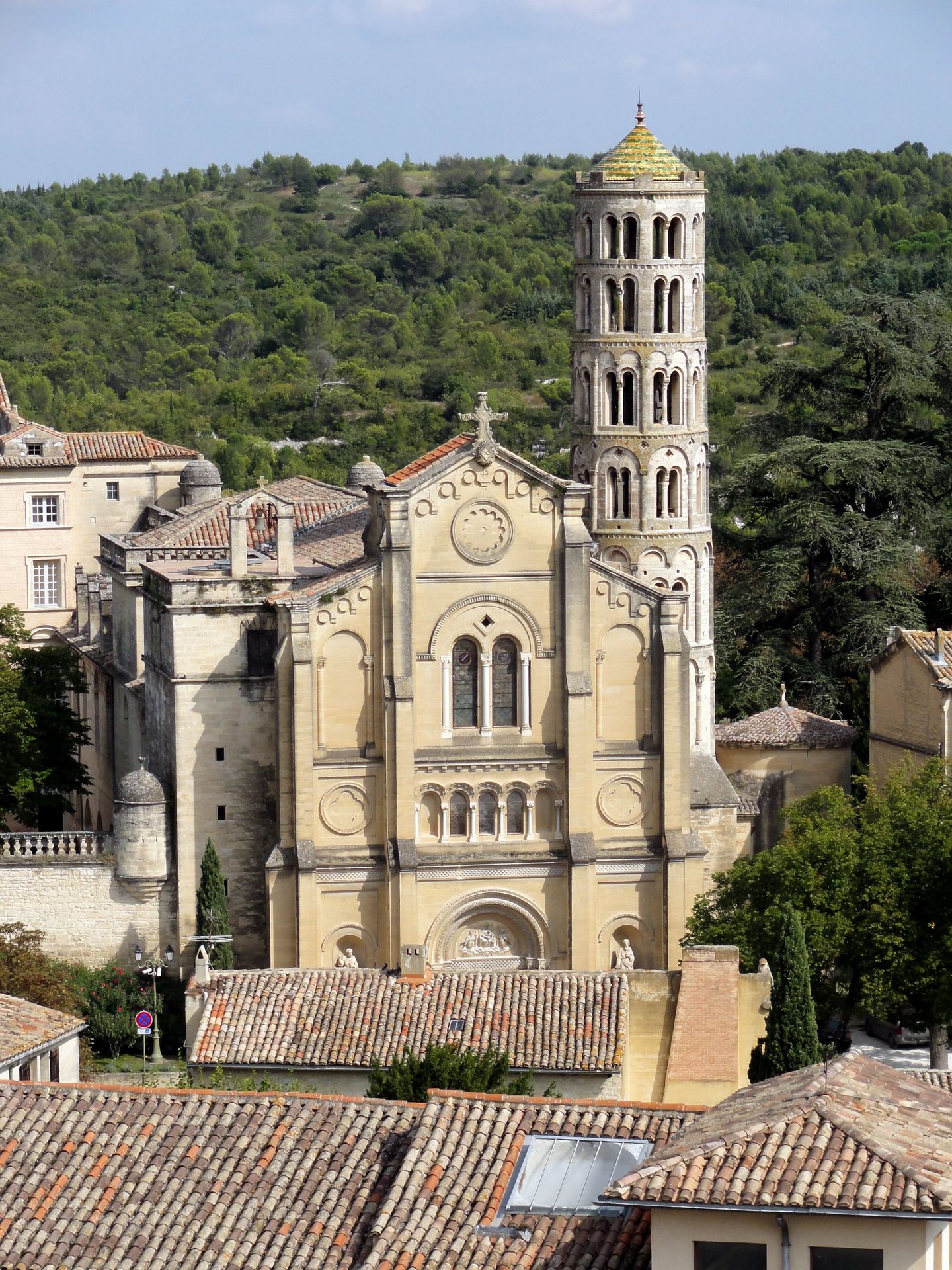
From the 5th century to the French Revolution, Uzès was the episcopal see, home to its cathedral built in 1090. The cathedral went through tumultuous times: destroyed during the Albigensian War, rebuilt, then destroyed again during the Wars of Religion. The current building dates from 1652.
The neo-Romanesque façade, added in 1873, was placed on top of the old structure. The rib-vaulted interior suggests that the cathedral was once far more sumptuous than it is today.
Among the remaining treasures are the 17th-century organs. These organs are remarkable in that they still retain their original shutters, a feature rarely preserved. Concerts are occasionally organized, offering visitors the opportunity to appreciate the sound quality of this historic instrument.
Find out more...
Book your car to go and see it !
🧐
Here are some lesser-known facts about Uzès Cathedral:
Romanesque crypt: Beneath the cathedral lies an 11th-century Romanesque crypt. Although little known, this crypt is a rare vestige of Romanesque architecture in the region and offers a fascinating insight into the medieval period.
Moorish influence: Some of the cathedral's architectural elements, notably its vaults and arches, display Moorish influences, testifying to the cultural exchanges between Europe and the Islamic world in medieval times.
Hidden treasure: It is said that a treasure was hidden within the walls of the cathedral, concealed during periods of invasion and pillage. Although this remains a legend, many researchers and history buffs have attempted to unravel the mystery over the centuries.
Link with the Knights Templar: There are theories that the Knights Templar had links with Uzès Cathedral, using its underground structures for secret meetings or to hide precious artifacts. Although unproven, this idea adds a touch of mystery to the cathedral's history.
Defensive architecture: The cathedral features defensive elements such as loopholes and fortifications, suggesting that it may have been used for defensive purposes during periods of conflict and political instability, in addition to its traditional religious role.