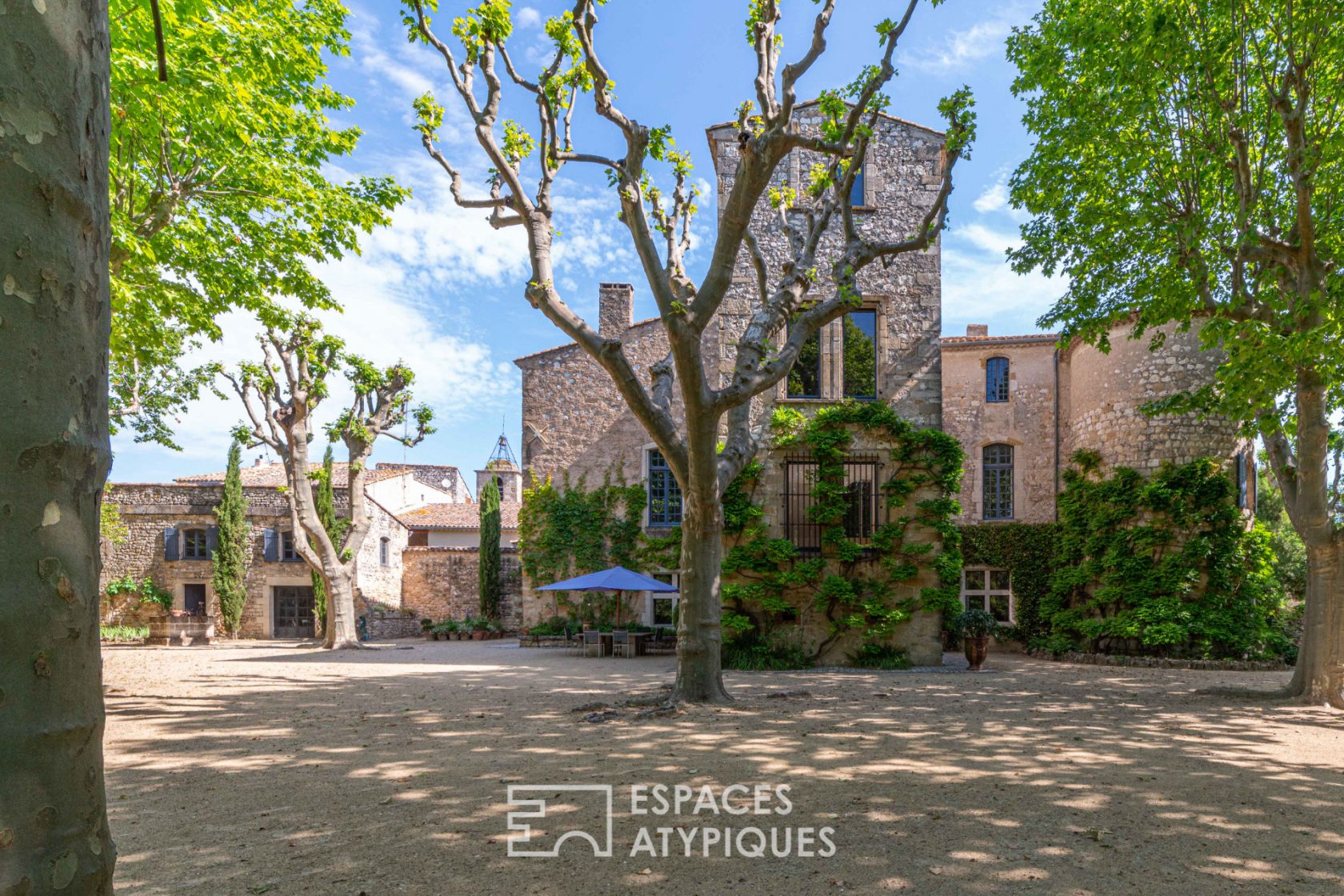
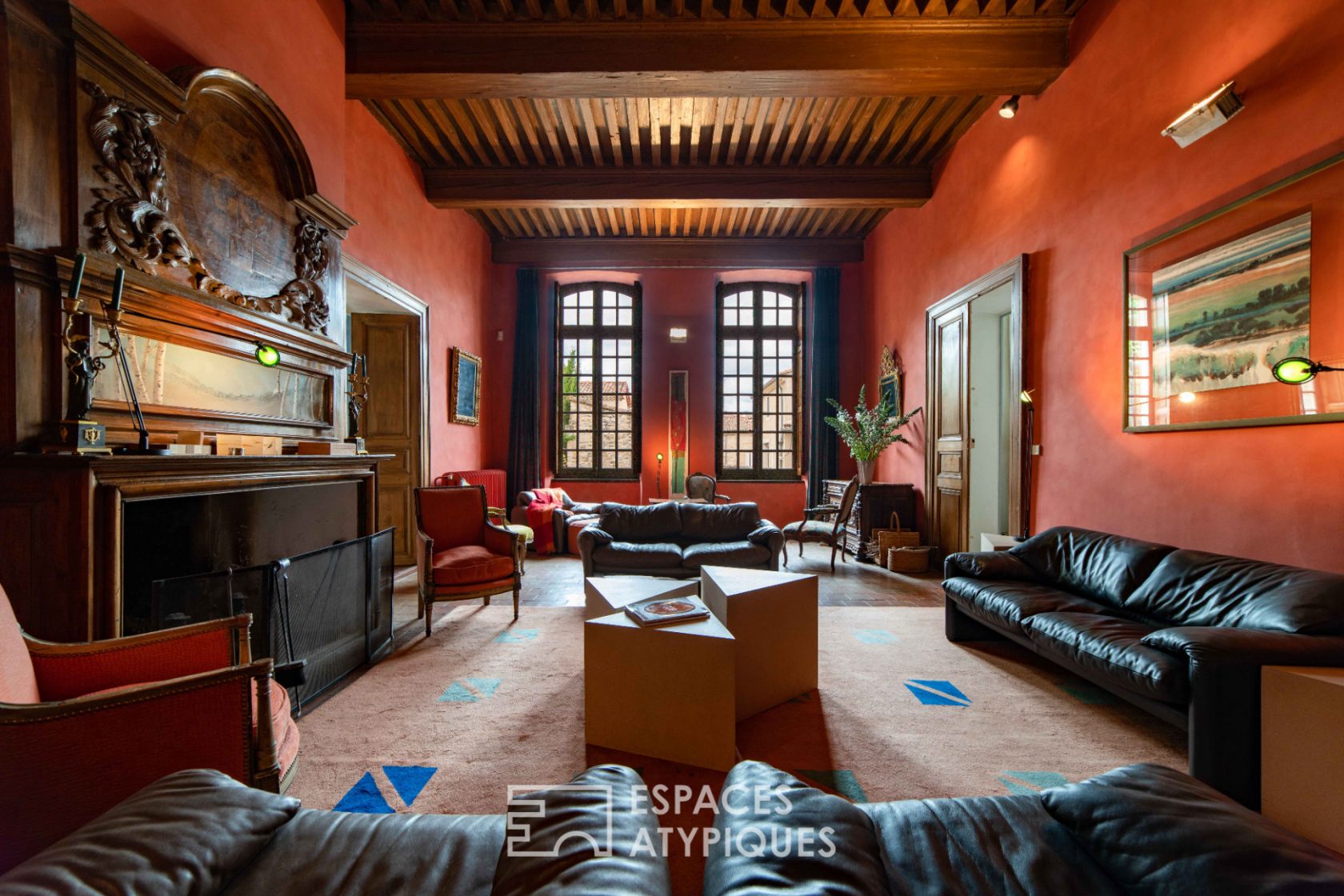
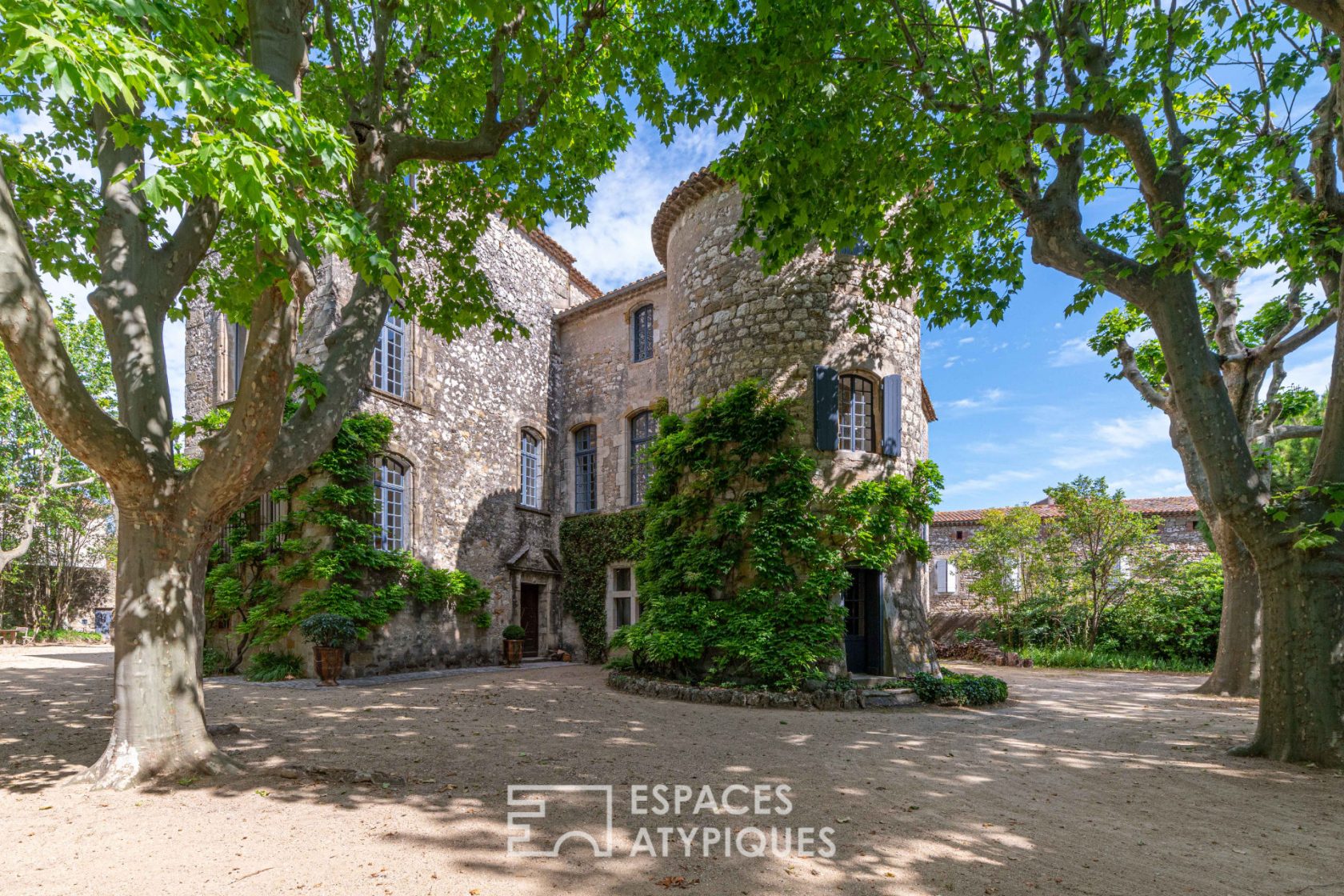
The Château de la Tour, located in Saint-Chaptes and listed as a Historic Monument, is of remarkable interest for its rich agricultural past and 12th century architecture.
Its oldest core, an imposing keep attributed to the Knights Templar, was embellished with a dwelling in the 16th century, followed by a small Directoire château at the end of the 18th century. Over the course of the following century, the architect Revoil made a number of modifications and extensions, while partially altering the layout of the park designed by Meunier.
The park, as depicted in a 1795 plan, included a food garden and orchards arranged around double plane tree avenues, cross paths and a noria to the west. Meunier, the Parisian architect who designed the neo-classical château, suggested adjustments in 1796, notably adding a grove of plane trees opposite the new gate, still visible today.
Majestic rows of plane trees create an imposing central axis, lending a spectacular aura to the park as a whole, which has become a landscape rich in tree varieties and embellished by a labyrinth of topiary-trimmed boxwood. Overlooking the park, a 13th-century keep offers a breathtaking view of the surrounding agricultural plain.
Visits to the château are by appointment only, adding an exclusive dimension to the discovery of this exceptional historical and architectural heritage. Website
Book your car to go and see it !